
How AI is Creating a New Kind of Art Museum
Dataland, LA's new AI art museum, offers immersive experiences with responsive digital rainforests. It blends art and tech, showcasing AI's creative potential.
Copy, download or open this article in ChatGPT or Claude
Dataland: How AI is Creating a New Kind of Art Museum
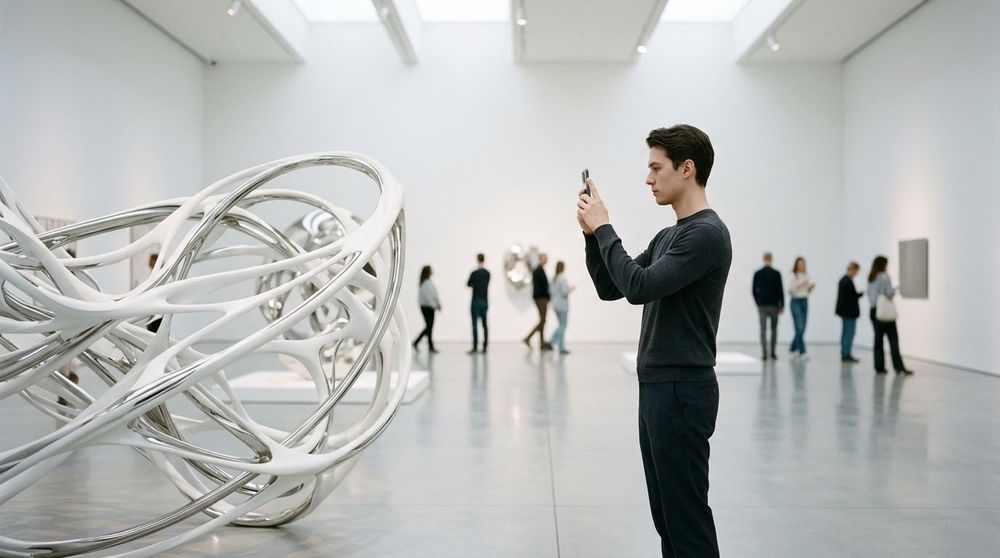
I think it is really cool how AI can sometimes be art. It often seems like the whole world is against the use of AI in the art community, but a new space opening in Los Angeles on June 20, 2026, is a perfect example of how AI can become art in its own right. Located inside the Grand LA, Dataland is the world's first museum completely dedicated to artificial intelligence art. Instead of looking at still paintings, visitors explore a 25,000-square-foot space where real-time computer data creates shifting sights, sounds, and smells that react to you as you walk through.
We have been creating art with technology for years, and AI is no less important than other tools. This museum is the result of a ten-year partnership. Back in 2016—long before the entire AI hype—Google researchers and media artist Refik Anadol started exploring what happens when an artist uses machine learning instead of a paintbrush. Over the years, they created huge public artworks. They projected historical records onto buildings in 2018, turned complex data into art in 2020, and last year created "Machine Dreams: Biophilia," which turned nature data into a living digital picture for Google's campus. Since this was already being done ten years ago, I find it only natural that today, when AI is a major part of our lives, it still holds a strong place in the art landscape. These projects prove that technology does not replace human artists; it expands what they can do.
Bringing the Rainforest to Life
The museum's very first show is called "Machine Dreams: Rainforest," and it is powered by a special AI program called the Large Nature Model. To build this, Google and Anadol teamed up with artist Efsun Erkılıç and building experts from Arup and Gensler. They hid all the computers and wires right into the walls and floors, so the screens blend in perfectly.
I find that AI usually appears in the news as something highly technical, but this museum is a fine example of how AI can be used creatively. The AI model processes words, sounds, and pictures all at the same time. They trained it on data from 16 different rainforests around the world, using weather numbers, sound recordings, and photos. They cared a lot about getting this data the right way. Instead of just scraping pictures off the internet, they partnered with trusted groups like the Smithsonian, the Cornell Lab of Ornithology, the London Natural History Museum, and the Yawanawá community in the Amazon.
Handling all this data took a lot of computer power. They used Google Cloud's AI tools to speed things up, cutting the time it took to prepare the images from 30 hours to just 80 minutes. To make sure everything was labeled perfectly, they used a program called Gemini 2.5 Flash. They told the AI to label exact scientific names of plants and animals, local weather, and exact times. This careful work made their labels 40 percent more accurate.
Art That Reacts to You
This is where you see they are not just creating cheap "AI slop," but realizing unique experiences that you would not even be able to have without AI. Inside the main rooms, the art responds to your body. Visitors wear special "Data.Link" wristbands that track body temperature, heart rate, and skin reactions. The AI uses this information right away to change the room. If your heart rate goes up, the digital rainforest on the mirrored walls and floors changes instantly. They also worked with L'Oréal Luxe to make custom smells of damp dirt and fresh leaves that release as the visuals change, making it feel totally real.
In another space called the Latent Room, visitors can draw simple shapes on a touchscreen. The AI uses its knowledge of rainforests to turn those basic lines into highly detailed nature scenes.
Even if this whole thing feels a bit like a Google marketing stunt, it remains an impressive feat. Running these massive AI programs requires a lot of energy. To help protect the environment, they run the computers at a Google Cloud data center in Oregon that uses 87 percent clean energy from wind and solar power. Because of this, the energy used for each visitor is tiny—about the same as charging a smartphone. They are also investing in the future, giving four new digital artists a $25,000 grant and the training they need to make their own AI art.
Of course, some people are still skeptical. Artist Thomas Brummett argues that relying on computer programs turns art into mere entertainment, making it feel more like a video game. Others, like Nettrice Gaskins, point out the real dangers of AI bias and computer errors. The creators of Dataland handled these worries by only training their AI on verified, licensed data from their partners, ensuring the art is accurate and original.
You really have to be artistic to come up with an idea like this, and you have to know how to deploy it in such a smart way. I would never have thought of it myself, and I am already a bit more involved with the creative side of being an AIGENEER. Visitors can now experience this amazing blend of art and technology firsthand, and see just how beautiful AI can be.

Sources:
Related articles
Inside the Google Gemini 3.8 Live Avatar Architecture
Google's Gemini 3.8 Live Avatar lets enterprises build real-time digital personas. Inside the low-latency, neural rendering architecture behind it.


Accelerating Local Air Pollution Modeling with Earth-2 CorrDiff
Earth-2 CorrDiff uses AI to model air pollution faster and more accurately, enabling policy simulations, health alerts & local training. Open-source soon.


Microsoft AI Launches MAI-Transcribe-2
MAI-Transcribe-2: Microsoft's new ASR for audio-to-text. Faster, more accurate, 60 languages, code-switching, speaker diarization. Promo price $0.10/hr.