
Inside the Google Gemini 3.8 Live Avatar Architecture
Google's Gemini 3.8 Live Avatar lets enterprises build real-time digital personas. Inside the low-latency, neural rendering architecture behind it.

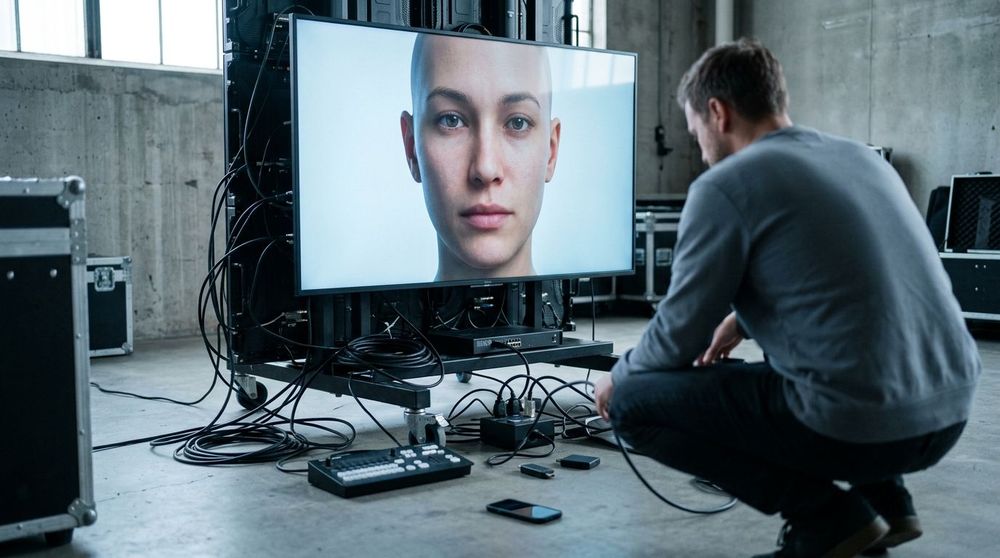
Google is pushing the boundaries of real-time AI interaction. On September 24, 2026, the company unveiled Gemini 3.8 Live with Live Avatar, a feature allowing enterprise users to build interactive, real-time digital personas. Just last week, Google gave Gemini realistic voices. Now, it has added a face to match. This tool, aimed at Gemini Enterprise subscribers, enables businesses to deploy interactive customer service agents that listen, react visually, and speak simultaneously.
How the Moving Avatar Works Behind the Scenes
When you talk to one of these digital characters, a complex sequence of tasks occurs in milliseconds to keep the conversation flowing naturally.
The process starts with your local device capturing audio and video. It streams your camera feed to Google's servers at a rate of up to one frame per second.
Keeping latency low is crucial for an intuitive dialogue. Instead of establishing a new connection with every exchange, the system uses a persistent WebSocket connection. This keeps the data line open constantly, minimizing delay.
The avatar can also multitask in the background. If you ask it to book a hotel room, the AI queries the database while maintaining the conversation. There are no awkward pauses or frozen animations while the system computes.
Additionally, the tool supports 97 languages and handles translation on the fly. If you pivot from English to Spanish mid-sentence, the system detects the shift, translates the response, and adjusts the avatar's lip-sync and facial expressions instantly.
Generating the realistic face relies on neural rendering. The system interprets the AI's generated speech and renders corresponding video frames in real time, locking the lip movements, head tilts, and expressions to the audio.
For transparency and security, Google embeds SynthID watermarks into both the audio and video streams. These markings are imperceptible to users but let software easily verify that the media is AI-generated.
How Companies Can Set Up and Use These Avatars
Businesses have a few paths to deploy these digital characters.
First, they can launch quickly using a library of pre-configured characters, complete with defined faces, voices, and personalities.
Second, for a tailored branding experience, companies can upload a single high-quality image of a mascot or spokesperson. Google's AI models then animate this static photo. Currently, this custom option is limited to select launch partners.
The system runs on Google's leading speech model, which currently tops industry benchmarks for voice quality and task execution.
Developers can integrate this in two ways: a server-to-server setup, which keeps user data securely routed through company servers before hitting Google, or a client-to-server setup for direct communication from the app.
To ensure high fidelity, the system ingests user microphone input at 16kHz and outputs the AI response at 24kHz, delivering clear and natural-sounding dialogue.
It is impressive to see the speed of progress here. While voice-driven animation has been around for some time, bringing it into real-time, low-latency dialogue is a significant milestone. I have not had a chance to test this new Gemini feature myself, so I cannot tell you if these avatars manage to cross the uncanny valley or if they still feel a bit unsettling. That said, investing heavily in these interfaces makes sense. We are creeping closer to having our own functional Jarvis. Whether that is a positive development is still up for debate.

Related articles

Accelerating Local Air Pollution Modeling with Earth-2 CorrDiff
Earth-2 CorrDiff uses AI to model air pollution faster and more accurately, enabling policy simulations, health alerts & local training. Open-source soon.


Microsoft AI Launches MAI-Transcribe-2
MAI-Transcribe-2: Microsoft's new ASR for audio-to-text. Faster, more accurate, 60 languages, code-switching, speaker diarization. Promo price $0.10/hr.


Mistral.AI's €3 Billion Deal
Sovereign AI: Enterprises host private, secure AI models, eliminating public cloud data risks & boosting independence. Mistral AI is a key player.