
How AI is Changing the 2026 World Cup: From Fun Filters to the Future of the Sport
Google & FIFA use AI for 2026 World Cup, enhancing fan experience, navigation, and referee decisions, raising debates on tech's role in sport.

Copy, download or open this article in ChatGPT or Claude
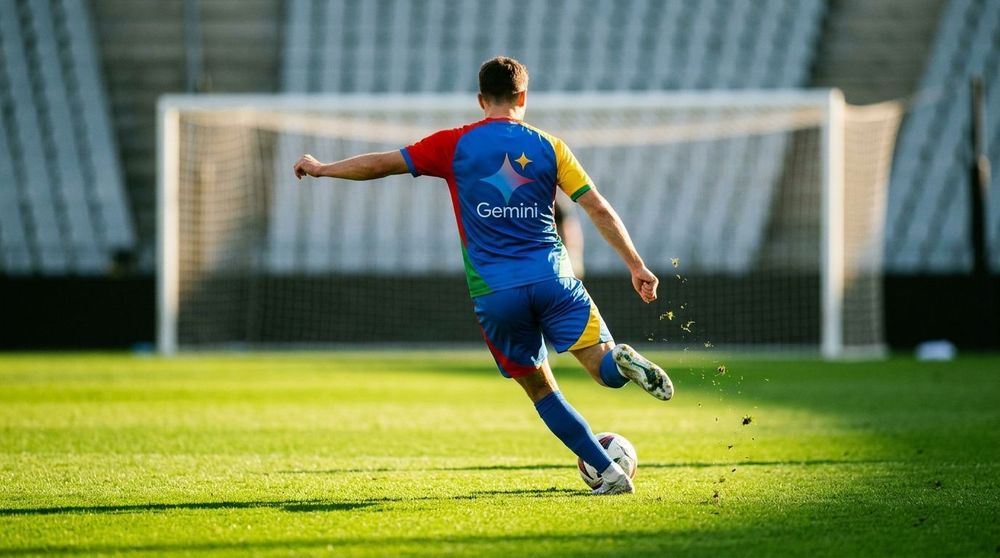
Using the biggest stage in the world to test out huge AI features seems like a no-brainer to me. As I look at the plans for the 2026 World Cup, I find it incredibly impressive that massive tech companies and sports organizations have managed to work together like this. For a tech giant like Google, rolling out new tools is just part of their everyday routine. But for FIFA—an organization not exactly known for adopting new technology quickly—this is a huge win. Let's not forget, it took them over ten years just to add basic goal-line technology!
Now, Google is bringing Gemini into almost everything we use, from Search and Maps to Waze. Instead of just showing boring blocks of text, the AI uses live match data to build custom screens on the fly. You'll see charts, images, and video highlights pop up as the game happens. There is even a feature that lets you set up an automated daily summary of soccer news, delivered right to your phone whenever you want. Inside Google Search, a new AI mode can handle tricky questions or help you book tickets. If you ask it to explain a team's strategy, the AI will create a custom, interactive picture to break it down for you. You can even pin live scores right to your phone's lock screen.
Of course, the usual fun gimmicks are there, too. Google added AI image makers with templates called 'Nano Banana.' You just go to the Images tab, hit the plus button, and click 'Create image.' You can upload a photo of yourself, and the AI will drop you into a stadium celebration. It is smart enough to give you the right team jersey and match the stadium lighting. Honestly, having your photo edited with your team's gear—or in my case, a classic 1986 Belgium national team haircut—is a really fun toy for the public. But to me, this hardly pushes the boundaries of what we know today.
AI is also going to make getting to the games a lot easier. Google Maps and Waze are using real-time data to guide drivers around stadium traffic and road closures. With a new 'Ask Maps' feature, you can give a long request like, 'Find me a table for four at 7:30 p.m. where I can watch the game and meet other fans.' The AI understands all those different details, searches millions of places, and finds the perfect spot. Maps is also adding an immersive 3D view. As you drive, buildings that block your view on the screen will turn see-through. Even the voice directions are getting smarter, telling you to 'turn right at the brick building' instead of just giving you the distance. Waze is getting in on the fun too, offering live score updates when your car is stopped and directions from 'Soccer Superfan Sidekicks' in 13 languages.
Behind the scenes, FIFA is rolling out its own AI. Team analysts get a tool called Football AI Pro, which sorts through massive amounts of game data to create text summaries, video clips, and 3D models. For people watching at home, broadcasters are using AI to smooth out the video from the 'ref-cam'—a camera worn on the referee's ear—so the footage isn't a shaky mess.
But what I find truly interesting—and a bit concerning—is how these technological changes will shift the future of the sport. FIFA is using computer vision to track player movements for semi-automated offside calls. They actually make 3D digital copies of the players to track their body parts during fast plays. The AI then whispers directly into the referee's earpiece to say if a play was offside or close.
Things like goal-line technology and automatic offside detection already have quite a controversial past. I think this will be knocked up a notch when you introduce smart AI into the mix. We have to remember that these AI programs are still basically just glorified guessing machines that predict the next word. Knowing how much is on the line with referee decisions—both for the sport itself and the massive betting industry—I see this as quite the challenge.
Adding to that, I am not sure we really want to automate the game even further. By its very nature, soccer is subjective. A good referee doesn't just look at each isolated moment; they look at the match as a whole and the dozens of micro-decisions that led up to a foul.
And let's not forget the ancient tradition of soccer: putting one common enemy—the human referee—in the center of the pitch. It makes sure both teams have someone to blame other than themselves! If we take that away and let computers make all the calls, players and fans will have to start looking at their own mistakes. Frankly, I am not sure the footballing world is ready for that kind of self-reflection.

Sources:
Related articles

Inside the Google Gemini 3.8 Live Avatar Architecture
Google's Gemini 3.8 Live Avatar lets enterprises build real-time digital personas. Inside the low-latency, neural rendering architecture behind it.


Accelerating Local Air Pollution Modeling with Earth-2 CorrDiff
Earth-2 CorrDiff uses AI to model air pollution faster and more accurately, enabling policy simulations, health alerts & local training. Open-source soon.


Microsoft AI Launches MAI-Transcribe-2
MAI-Transcribe-2: Microsoft's new ASR for audio-to-text. Faster, more accurate, 60 languages, code-switching, speaker diarization. Promo price $0.10/hr.