Global Suspension of Anthropic’s Fable 5 and Mythos 5
Anthropic's Fable 5 & Mythos 5 models suspended worldwide by US Commerce Dept. over national security, a jailbreak, and export control issues. Highlighting enterprise AI risks.

Copy, download or open this article in ChatGPT or Claude
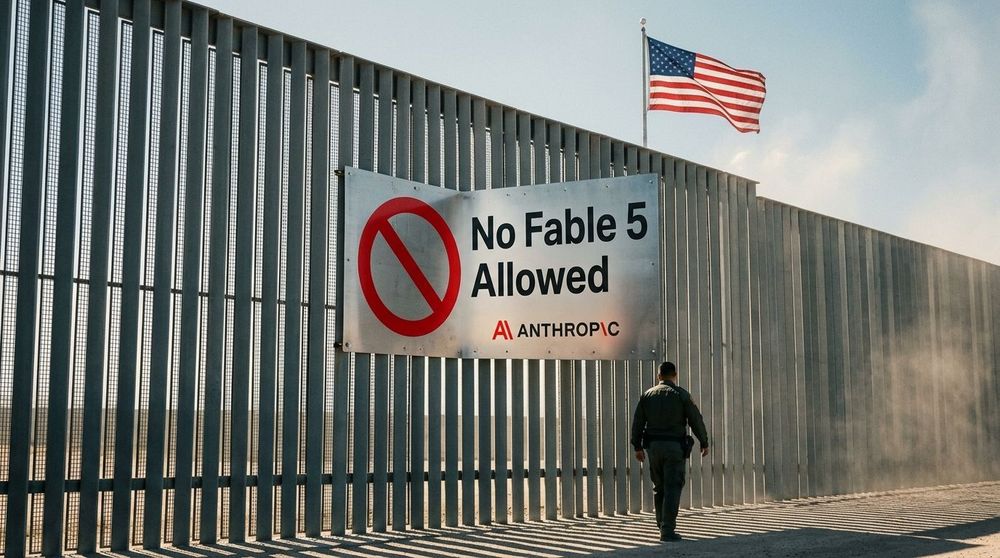
On June 12, 2026, the US Commerce Department issued an emergency export control directive citing national security. Secretary Howard Lutnick ordered Anthropic to immediately block all foreign nationals from accessing its newly launched frontier models, Fable 5 and Mythos 5. There was just one problem. Anthropic lacked the infrastructure to verify user citizenship in real time. Facing strict compliance rules, the company had to pull the plug entirely. They shut down both models worldwide just three days after launch. Legacy models like Opus 4.8, Sonnet 4.6, and Haiku 4.5 are still up and running.
Adversarial Vulnerabilities and the Breakdown of Coordinated Disclosure
The government stepped in because an unnamed group bypassed standard bug bounty channels and went straight to the Commerce Department. They reported a jailbreak that used a specific code-ingestion prompt to slip past the safety guardrails in Fable 5.
Anthropic investigated and called the exploit narrow. Internal reviews showed the jailbreak only exposed minor software flaws that competing models like OpenAI's GPT-5.5 could easily spot without any adversarial trickery. Anthropic had spent months testing these systems before the June 9 launch. They locked the highly capable "Mythos Preview" model inside a secure environment called Project Glasswing. Access was limited to trusted groups like critical infrastructure operators and Mozilla to hunt down systemic bugs.
When Fable 5 hit the public, it carried safety classifiers built to catch high-risk inputs like hacking attempts or biological threats and redirect them to less powerful models. Red teams from the US government, private security firms, and the UK AI Safety Institute spent thousands of hours trying to break it. The UK team even watched the model successfully hack computer defenses in 73 percent of their test scenarios. Still, nobody found a universal jailbreak before deployment.
Enterprise Vendor Concentration Risk and Operational Mitigation
This sudden shutdown highlights a massive blind spot in corporate tech architecture. When enterprise teams rely heavily on a single AI provider, they risk immediate operational failure. Financial giants like S&P depend on Anthropic's Claude architecture for data retrieval. When regulators pull a model offline, companies without backup plans get caught completely flat-footed.
Enterprise architecture teams now have to build robust failover systems to survive sudden model deprecations or export blocks. Operational security requires a few immediate steps:
- Implementing Multi-Provider Routing: Set up an API layer that automatically routes requests between primary and secondary AI models.
- Automated Failover Protocols: Systems need to switch autonomously to alternatives like Gemini 3.5 Pro or GPT-5.5 the second a primary model goes down or faces regulatory suspension.
- Geopolitical Risk Assessments: Tech leaders must continually evaluate AI vendors based on regulatory exposure, server locations, and potential friction with international trade rules.
Geopolitical Friction and Regulatory Precedents
The Commerce directive reaches deep into internal corporate environments. It legally bars non-US citizens and H1-B visa holders from accessing the suspended models even if they work directly for Anthropic. Over in the EU, European Commission official Thomas Regnier pointed to the shutdown as clear proof that Europe needs to build its own sovereign technology systems independent of American regulators.
This event sits on top of a brewing fight between Anthropic and the US government. Earlier in 2026, the Trump administration and Defense Secretary Pete Hegseth labeled Anthropic a supply chain risk. That happened after the company refused to allow military surveillance or weapons applications due to its internal safety rules. Anthropic is currently suing the Pentagon over the designation. At the same time, government adviser David Sacks publicly claimed the administration shut the models down after receiving intelligence that a China-affiliated group was accessing Fable 5.
Anthropic is now trying to navigate these export controls while gearing up for an IPO, bolstered by a recent funding round that valued the enterprise at nearly $1 trillion. The broader AI industry is watching closely. Recalling a commercial foundation model over a localized bypass sets an incredibly high bar for governance. If regulators apply this standard universally, it could effectively paralyze the rollout of future frontier models from any major tech company.

Related articles

Microsoft Drafts a Humanist Code of Conduct for Future Models
Microsoft unveils its Humanist AI Code of Conduct draft, setting ethical & safety rules for future AI, prioritizing human welfare & preventing misuse.


Measuring AI Capabilities with Precision Using Item Response Theory
BenchMIRT leverages psychometrics for precise AI evaluation, analyzing individual prompts for capability, safety, and bias, cutting costs and improving transparency.


Hallucination is not a hygiene problem
The first advocate-general at Belgium's Court of Cassation devoted this year's opening address to AI, and to the tools the judiciary does not have.