Why France’s Move to Build Its Own AI is a Smart Step for Europe
France establishes a fully independent AI system, securing data privacy, leveraging nuclear power, and attracting €109B, ensuring European tech sovereignty.
Copy, download or open this article in ChatGPT or Claude
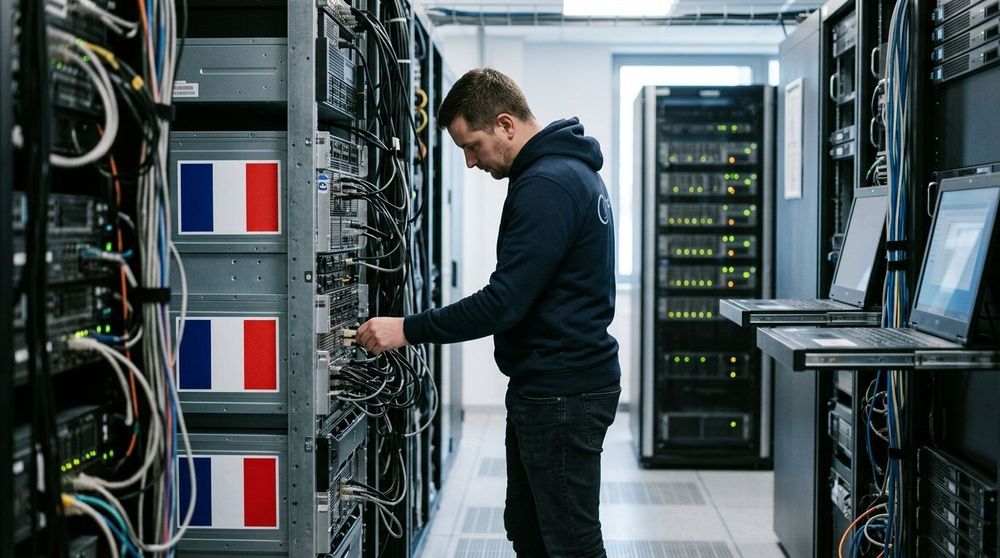
I have been watching the global AI race closely, and what is happening in France right now is truly remarkable. As of mid-2026, the country has set up a complete AI system—both the physical computers and the software—that runs entirely on its own terms. More importantly, it fits perfectly within European data privacy laws.
By keeping everything on European soil, France successfully avoids relying on big U.S. cloud companies and sidesteps foreign laws like the U.S. CLOUD Act. The way I see it, this is a massive win for privacy and independence. It ensures that sensitive data stays fully compliant with Europe's strict rules, like GDPR and the EU AI Act.
To understand how they pulled this off, you have to look at the money and support they have gathered. During recent major events, France locked in a massive €109 billion in investment commitments. Some of the world's biggest investment players are backing this vision. SoftBank put in €45 billion to build huge data centers. Brookfield Asset Management added €20 billion, and Bpifrance contributed €10 billion. Even the chip-making giant ASML put €1.3 billion directly into Mistral AI, a leading local AI company. This tells me that the global market has huge confidence in what France is doing.
The Heavy Hardware and Clean Power
What stands out to me is how they are handling the physical side of this project. Building massive computer systems requires a lot of electricity and careful planning. Foxconn is testing advanced NVIDIA computer systems in the Czech Republic, and then a French technology firm named Bull does the final assembly and safety checks at a facility in Angers, France.
To keep these powerful computers running night and day without polluting the air, France is plugging them directly into its nuclear power grid. This provides steady, low-carbon electricity. Tech giants Schneider Electric and NVIDIA are working together to design the power plans so these systems never shut down, even during heavy workloads.
Here is how their main computer network looks today, and I find these numbers staggering:
- Mistral AI (in Bruyères-le-Châtel): They are running an active system using 18,000 advanced NVIDIA processors. This currently uses 44 megawatts of power and will grow to a massive 200 megawatts by 2027.
- Campus AI: This is a giant new facility under construction that will eventually use 1.4 gigawatts of power.
- Fluidstack Supercomputer: A system running on 500,000 graphics cards (GPUs).
- Jean Zay Cluster: This is France's older national supercomputer, which is still incredibly fast and powerful.
Keeping the Cloud Local and Secure
In my view, having fast computers is pointless if you cannot access them safely. That is why local French cloud companies like Scaleway, OVHcloud, and OUTSCALE are managing access to these systems. OUTSCALE even holds a special high-security certification called SecNumCloud 3.2, which is the absolute highest safety badge for government and business data in France.
Local researchers and groups, such as Pleias, LINAGORA, and H Company, are using these secure setups to train new AI systems that natively understand European languages. They even use a smart shortcut: older AI systems automatically clean up data and test newer AI systems, creating a continuous loop of self-improvement.
How Businesses Use the Secure Data Pipeline
To keep corporate secrets safe, French businesses use a special data-handling pipeline. I like how simple and secure this setup is. It ensures that sensitive company information never leaves European servers. Here is how it works step-by-step:
- Uploading the Data: A company uploads its raw documents directly into a private European server.
- Breaking It Down: The system cuts the text into smaller, easy-to-read pieces.
- Storing the Pieces: These text pieces are turned into digital codes and stored in a secure local database.
- Searching for Answers: When a worker asks the AI a question, the system searches the local database to find the exact matching facts.
- Giving the Answer: The AI reads those facts and writes a clear, helpful answer back to the user.
Real-World Impact
What really excites me as an observer is that this is not just an academic experiment. Major companies are already using this local network to run their daily operations:
- Sanofi: This healthcare giant uses AI assistants to find new medicines faster and organize their global shipping.
- Orange Business: They run a secure AI platform for 100,000 of their own employees and offer the same safe system to government clients.
- Stellantis: The carmaker sends live factory data into the system to create digital copies of their global factories, helping them run simulations.
- Dassault Systèmes: They connect virtual 3D models with open-source AI to test how complicated industrial machines work before they are even built.
- TotalEnergies: They use a supercomputer co-designed by Dell and NVIDIA to map underground energy sources.
- L'Oréal: The beauty company uses a special platform to quickly create 3D digital images for their global advertising campaigns.
- Startups: Even smaller software creators, like Nebula and Ryax Technologies, are allowed to test and run their apps on the national Jean Zay supercomputer.
My Final Thoughts
The way I see it, this project is about something much larger than just technology. It is about strategic independence and economic strength. By building a complete AI ecosystem on their own soil—from the physical microchips and clean nuclear energy to the software and secure cloud servers—France is showing the world how to stay independent. This gives Europe total control over how AI is trained, used, and regulated. It proves that European companies do not have to rely on foreign tech giants to compete and win in the modern world.

Related articles

Scaling African AI Infrastructure through GPU Deployments and Local Compute
Africa is building high-density GPU data centers and sovereign AI infrastructure to close the regional compute gap and power local tech innovation.


Why Mistral’s Bold Leap into European Cloud Power is a High-Stakes Bet
Mistral AI plans a massive European cloud infrastructure to ensure digital sovereignty, bypassing US systems. It's a costly, high-stakes bet.
Scaling L4 Robotaxis: A Technical Breakdown of the NVIDIA DRIVE and Halos Stack
NVIDIA's DRIVE & Halos platforms offer an end-to-end solution for L4 robotaxis, covering in-car compute, safety OS, and cloud AI training.