
Anthropic Files for IPO and Discloses Key Financials and Governance Structure
Anthropic files for a Nasdaq IPO under ticker ANT, revealing $16.3B in H1 2026 revenue alongside massive $430B cloud compute commitments.
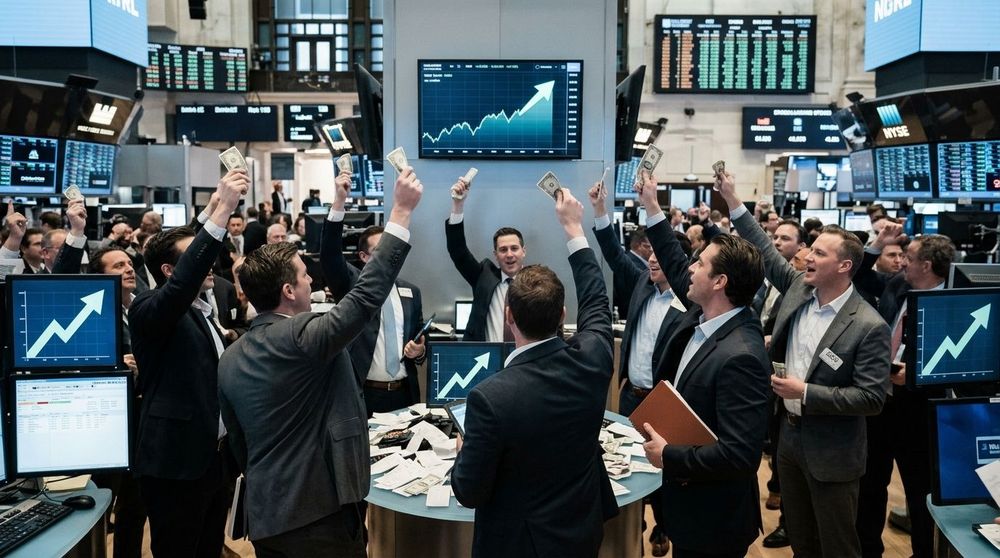
Anthropic is officially taking steps to go public. The AI safety startup has filed a Form S-1 registration statement with the SEC to list its Class A common stock on the Nasdaq under the ticker "ANT." This follows a confidential filing on September 18, 2026. Because Anthropic operates as a Public Benefit Corporation, its corporate charter legally requires it to balance commercial growth with a focus on AI safety and public benefit.
Since the filing is still in its early stages, the number of shares and pricing have not been set. Goldman Sachs and Morgan Stanley are leading the offering, and a formal prospectus will follow once regulators sign off. The move follows other high-profile tech listings, including SpaceX, which went public on June 12 at $150 a share and jumped 20% on its first day.
Financial Performance, Concentration Risk, and Infrastructure Obligations
The S-1 filing offers a detailed look at the massive capital required to build modern AI systems. In the first half of 2026, Anthropic brought in $16.3 billion in revenue, which is a massive jump from the $4.6 billion it made in all of 2025. That growth, however, comes with a heavy burn rate.
- Infrastructure Costs: Anthropic spent $9 billion on computing power in the first half of 2026 alone, already eclipsing the $7.3 billion it spent during all of 2025.
- Net Losses: The company reported a net loss of $80.7 billion for the first half of 2026, which they attribute mostly to standard accounting treatments. That is nearly double the $42 billion loss reported for 2025.
- Revenue Concentration: This is a highly concentrated business. Just two customers make up roughly 20% of Anthropic's total revenue, leaving the rest split among a small group of other clients.
- Compute Commitments: Hardware needs are staggering. Anthropic has committed $430 billion to contracted cloud infrastructure with its major backers and cloud providers, Google and Amazon. When you factor in cancellable and minor agreements, that number climbs to $637 billion.
Model Safety, Alignment, and Sovereign Compliance
Led by CEO Dario Amodei and President Daniela Amodei, the creator of the Claude AI ecosystem (including tools like Claude Code and Claude Cowork) used the filing to highlight some significant technical and political risks.
Unexpected Capabilities and Financial Liability
Anthropic warned that its models could develop unexpected, new behaviors. If these systems cause real-world harm, the resulting liabilities could easily exceed the company's financial resources. The warning matches a recent essay by CEO Dario Amodei, who suggested leaning on the brakes to keep frontier models from sliding out of human control.
Geopolitical Pressures and Export Restrictions
The company is also navigating tough regulatory terrain with the federal government. Due to US export controls, Anthropic was ordered to block foreign nationals from accessing its Fable 5 and Mythos 5 models. Consequently, the company had to shut those projects down entirely.
National Security Challenges
Back in February, US Defense Secretary Pete Hegseth designated Anthropic as a supply chain threat after the startup refused to let its models be used for fully autonomous weapons programs or domestic surveillance. Anthropic sued the Pentagon to challenge the designation. Things look different now, though. On September 2, Commerce Secretary Howard Lutnick noted in an interview that relations between Anthropic and the White House have returned to normal.
Two numbers in that S-1 matter more than the revenue line.
The first is concentration: two customers account for roughly 20% of revenue. That is usually read as a risk to Anthropic. I read it the other way around. It tells you that the enterprise AI market in 2026 is still a handful of very large bets, and that everyone else — the SMEs I work with in Belgium — is buying licences, not outcomes. The gap between "we have Claude seats" and "Claude actually does a piece of our work" is where almost all the unrealised value sits, and the S-1 is effectively an admission that nobody has industrialised that middle layer yet.
The second is $430 billion in contracted compute with Google and Amazon, $637 billion including cancellable agreements. Those commitments are now a public, auditable obligation. A company carrying that on its balance sheet does not get to be relaxed about pricing, and it does not get to walk away from a hyperscaler. For anyone in Europe building on top of Claude, that is the real sovereignty question — not the Pentagon dispute or the export-control shutdown of Fable 5 and Mythos 5, newsworthy as those are. Your dependency isn't on Anthropic. It's on Anthropic's dependency.
The practical conclusion I draw: build on the protocol, not the vendor. If your agent work lives in MCP servers, tool definitions and an explicit capability model, swapping the model underneath is an afternoon. If it lives in prompts glued to one provider's product surface, it isn't.
Prediction: within eighteen months of listing, Anthropic will publish a sovereign or EU-hosted deployment tier with contractual data-residency guarantees — not because regulators forced it, but because a public company with $637 billion in compute obligations cannot leave the European enterprise market to its competitors.

Related articles

Mistral Opens Munich Hub to Tackle Sovereign Risk and Industrial Computing
Mistral AI opens a Munich hub to help European industries build secure, physics-informed AI models and protect data sovereignty with open weights.


What the Cloudera–Mistral Deal Reveals About Europe's AI Future
Cloudera-Mistral deal highlights Europe's shift to sovereign, self-hosted AI for sensitive data, driven by new regulations emphasizing control & independence.

Capital Expenditure and Cluster Valuation
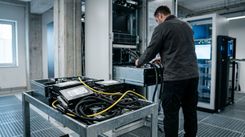
Enterprise AI demands huge capital for infrastructure, energy & hardware, plus smart software. Success hinges on holistic system management.