
Anthropic Launches Claude for Teachers with FERPA Privacy Protections
Anthropic offers free Claude AI to US K-12 teachers for a year, aiding admin, planning, and curriculum with strong data privacy & education app integration.

Copy, download or open this article in ChatGPT or Claude
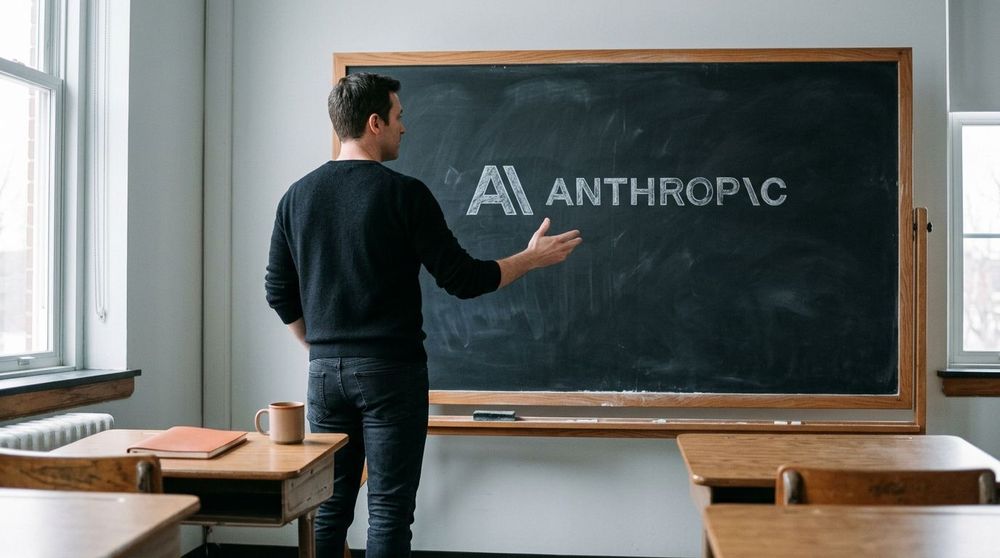
Anthropic has rolled out a new initiative called 'Claude for Teachers,' offering verified K-12 educators in the U.S. one year of free access to its premium features. Teachers who are 18 or older have until June 30, 2027, to sign up. The program is strictly for administrative and instructional staff; students cannot use it directly. Instead, the focus is on helping teachers automate administrative tasks, plan lessons, and organize curricula.
Data Privacy, Compliance, and Real-World Risks
Bringing generative AI into schools is always tricky due to strict student privacy laws. To address these compliance issues, Anthropic teamed up with the American Federation of Teachers (AFT) to create custom service terms aligned with the Family Educational Rights and Privacy Act (FERPA). Under this agreement, Anthropic will not use teacher prompts or model outputs to train its AI models. The system also includes an automated safety protocol that deletes a chat history if it is flagged for containing student personally identifiable information (PII).
But there is a catch. Uploading documents with student names, grades, or special education details still poses a security risk. What is more, the automatic safety system is a bit of a double-edged sword. If a teacher accidentally uploads protected student data, the compliance protocol will permanently wipe the entire active chat session, causing instant data loss.
Anthropic is entering a highly competitive market here. OpenAI currently offers free ChatGPT access to educators through June 2028 under standard privacy configurations, and Google provides Gemini to educators at no cost as well. This push makes sense when you look at the numbers. During the 2024-2025 school year, about 60% of teachers integrated AI tools into their workflows. Yet, the rapid adoption has raised some concerns. Research from the Center for Democracy and Technology shows that half of students feel less connected to their teachers because of these tools. On top of that, 70% of teachers worry that generative AI could hurt their students' thinking and learning skills.
Integration, Customization, and Classroom Tools
To make the tool practical for daily use, Anthropic connected the platform to the Learning Commons database. This link gives Claude real-time access to official K-12 academic standards across all 50 states. It also pulls in verified curriculum content from providers like OpenSciEd and Illustrative Mathematics, making it easier for teachers to draft lesson plans that meet state requirements. Educators can also ask the model to adjust the complexity of assignments to match different student needs.
Using its Model Context Protocol (MCP) connectors, Claude integrates with nine popular education apps, including Canva Education, Brisk Teaching, ASSISTments, Coteach, Diffit, Eedi, MagicSchool, Snorkl, and TeachFX. For example, teachers can use the Canva integration to build classroom visuals right from a chat prompt.
The package also includes access to Claude Cowork and Claude Code. Claude Cowork runs in the background, handling tasks on a schedule rather than waiting for manual inputs. A teacher could, for instance, set it to review homework submissions at 4:00 PM and update the next day's lesson plan based on how the class did. It can also analyze attendance records and grades to spot students who might be falling behind.
Anthropic has open-sourced the underlying code for these educational features on GitHub. To test how this tech impacts teacher workloads, the company is running a pilot program with the Detroit Public Schools Community District, funded by the Gates Foundation. Meanwhile, the non-profit Playlab is helping schools build their own customized classroom tools, and Teach For America has launched a free AI literacy course to help teachers use these tools safely.

Related articles

Inside the Google Gemini 3.8 Live Avatar Architecture
Google's Gemini 3.8 Live Avatar lets enterprises build real-time digital personas. Inside the low-latency, neural rendering architecture behind it.


Microsoft Drafts a Humanist Code of Conduct for Future Models
Microsoft unveils its Humanist AI Code of Conduct draft, setting ethical & safety rules for future AI, prioritizing human welfare & preventing misuse.

Measuring AI Capabilities with Precision Using Item Response Theory
BenchMIRT leverages psychometrics for precise AI evaluation, analyzing individual prompts for capability, safety, and bias, cutting costs and improving transparency.