
Scaling African AI Infrastructure through GPU Deployments and Local Compute
Africa is building high-density GPU data centers and sovereign AI infrastructure to close the regional compute gap and power local tech innovation.
Copy, download or open this article in ChatGPT or Claude
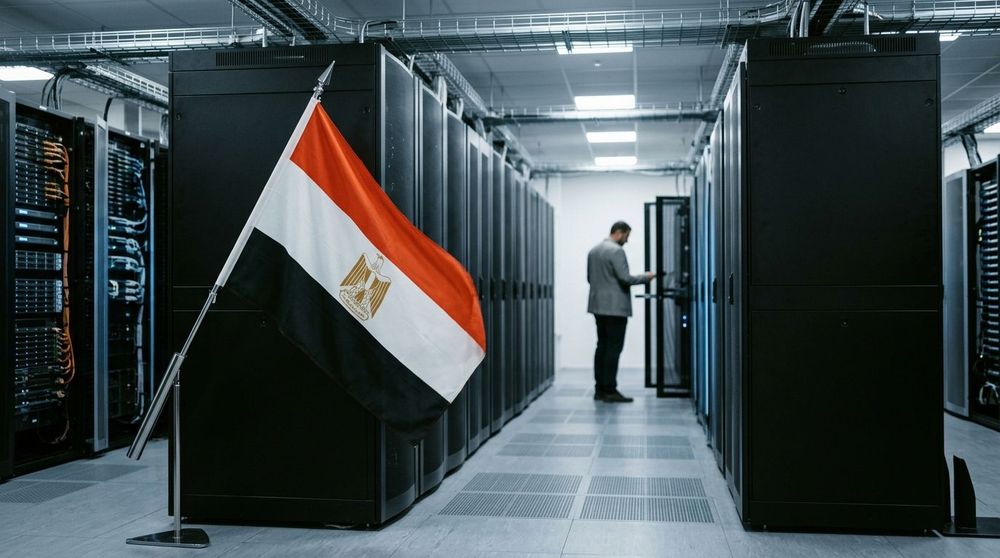
Africa accounts for roughly 18% of the global population but less than 1% of the world's data center footprint. Because of this, regional developers have historically had to export datasets and run training workloads on overseas cloud infrastructure, which comes with high latency and expensive egress fees.
To close this compute gap, hardware operators are moving away from traditional, CPU-reliant colocation facilities toward high-density GPU "AI factories" designed to process large models right where the data lives.
According to McKinsey, Africa's data center power demand sits at about 0.4 gigawatts (GW). That requirement is projected to scale to between 1.5 GW and 2.2 GW by 2030, requiring an estimated $10 billion to $20 billion in physical infrastructure investments.
High-Density GPU Deployments and Grid Integration
Hardware operators are building regional compute nodes by deploying high-density GPU clusters across key sovereign jurisdictions.
                                [Regional AI Grid]
                                        │
           ┌────────────────────────────┼────────────────────────────┐
           ▼                            ▼                            ▼
[Cassava Technologies]         [Nexus Core Systems]          [Aeonian Project]
 ├─ 3,000 GPUs (Initial)        ├─ 500 MW (Casablanca)        ├─ 100 MW (Karuma Hydro)
 ├─ 12,000 GPUs (Planned)       └─ NVIDIA Blackwell           └─ NVIDIA Blackwell GB300
 └─ DFC/Google Funded ($90M)
Stratos Lab, ECOBLOX, and Digital Parks Africa
In South Africa, this consortium is deploying an AI cloud network powered by more than 50 NVIDIA HGX B300 systems. The cluster is designed to deliver an aggregate compute performance of 7 exaflops.
Cassava Technologies
Cassava is building a sovereign cloud footprint across South Africa, Egypt, Kenya, Nigeria, and Morocco, backed by a planned $720 million investment. The first phase deploys 3,000 GPUs in a South African facility, with plans to scale another 12,000 GPUs across other territories. This expansion is supported by a $90 million investment from a consortium including the US International Development Finance Corporation (DFC), Google, and the Finnish Fund for Industrial Cooperation.
In Egypt, Cassava has partnered with Vodafone Egypt, which is investing over 20 billion Egyptian Pounds (EGP) this fiscal year to upgrade its digital systems, to launch a localized GPU-as-a-service (GPUaaS) model. This partnership aims to lower the high upfront capital cost of hardware for local enterprises.
Nexus Core Systems
In North Africa, Nexus Core Systems is working with the Moroccan government to build a 500-megawatt (MW) computing facility near Casablanca. The $1.2 billion site will use NVIDIA Blackwell architecture, powered by clean energy from TAQA Morocco.
The Aeonian Project
In Uganda, this project integrates a 100 MW compute facility directly within the Karuma hydropower station. Funded by international partners, the clean-energy site's initial phase features a 15 MW physical building housing a 10 MW computing module with NVIDIA Blackwell GB300 chips.
Hassan Allam Utilities and A15
In Egypt, this joint venture has committed $400 million to set up a localized data center facility under a license approved by the National Telecommunications Regulatory Authority (NTRA).
| Project Location | Key Partner Companies | Estimated Cost | Energy Capacity | Chip Architecture |
|---|---|---|---|---|
| Morocco | Nexus Core Systems, Moroccan Ministries | $1.2 Billion | 500 Megawatts | NVIDIA Blackwell |
| South Africa / Regional | Cassava Technologies | $720 Million | Not specified | 15,000 NVIDIA GPUs |
| Egypt | Hassan Allam Utilities, A15 | $400 Million | Not specified | Standard Data Center |
| Uganda | Synectics Technologies, Schneider Electric | Not specified | 100 Megawatts | NVIDIA Blackwell GB300 |
Legacy HPC vs. Modern AI Hardware
These high-density GPU projects represent a major shift from legacy high-performance computing (HPC) installations on the continent, which have traditionally run lower-density clusters optimized for standard, scientific, and weather-modeling workloads.
| Computer Name | Location | Calculation Speed | Hardware Internals |
|---|---|---|---|
| Toubkal | Morocco | 3.15 Petaflops | Updated with A100 and H100 GPUs |
| Lengau | South Africa | 1.00 Petaflops | 36 NVIDIA Tesla V100 chips |
| Taouey | Senegal | 0.54 Petaflops | 48 NVIDIA Tesla V100 chips |
| Côte d'Ivoire | Côte d'Ivoire | 0.32 Petaflops | 24 NVIDIA Kepler K80 chips |
Developer Ecosystem and Localized Software Deployment
Sovereign compute hardware requires a steady pipeline of skilled engineering to run local inference and fine-tuning workloads. To support this, NVIDIA aimed to train 100,000 developers across the continent over three years, with more than 85,000 developers certified to date. Nigeria is now the second-largest global market for this developer program, while Egypt’s registration base grew tenfold in a single year.
This training pipeline is already driving commercial deployments:
- Ecosystem Capital: In Egypt, developer forums at the Grand Egyptian Museum, alongside groups like the NVIDIA VC Alliance, A15, M Empire, Flat6Labs, and Algebra Ventures, are connecting local startups with international investment channels.
- InstaDeep: Founded in Tunis in 2017 using a single NVIDIA server, the developer grew to deploy systems for biochemistry and logistics optimization, ultimately leading to an acquisition by BioNTech for roughly $680 million.
- MeetKai: Partnered with Smart Africa, the company is using localized NVIDIA compute infrastructure to scale its applications in Egypt.
- Lelapa AI: Focused on addressing natural language processing gaps for dialects underrepresented by global LLMs, Lelapa AI developed the InkubaLM multilingual model and Vulavula, a speech-to-text and NLP program designed specifically for South African languages like Sesotho and isiZulu.
Ultimately, the greatest opportunity lies in connecting this new regional compute power with local talent, local ownership, and practical everyday applications. The current wave of infrastructure investments could provide the essential foundation needed for this connection.
To achieve this, digital sovereignty must become a core design principle for these projects. This means looking closely at who actually operates the computers, sets the rules for who can use them, and keeps control over the data, models, and knowledge being built. While where a data center is built matters, local projects must also think about their reliance on foreign hardware suppliers, software platforms, and international funding.
From a technical perspective, planning should start with the tools and applications that local people want to build. Not every problem needs giant, expensive computing clusters. In many cases, smaller models, local processing, or focused updates to existing software will work perfectly. Making these choices early helps build infrastructure that makes sense both financially and practically.
A major part of this value is the focus on local languages. When local knowledge, local data, and local developers join forces, they can build tools that truly reflect the daily lives of users. Therefore, new compute investments need to link directly with schools, universities, startup hubs, and affordable access plans for local businesses from the very start.
Ultimately, the true measure of success will not just be the number of high-powered chips or megawatts of power installed. Instead, it will be how many local organizations can independently build, run, and fund their own useful AI systems over the long term.
Related articles

Why Mistral’s Bold Leap into European Cloud Power is a High-Stakes Bet
Mistral AI plans a massive European cloud infrastructure to ensure digital sovereignty, bypassing US systems. It's a costly, high-stakes bet.


Why France’s Move to Build Its Own AI is a Smart Step for Europe
France establishes a fully independent AI system, securing data privacy, leveraging nuclear power, and attracting €109B, ensuring European tech sovereignty.
Scaling L4 Robotaxis: A Technical Breakdown of the NVIDIA DRIVE and Halos Stack
NVIDIA's DRIVE & Halos platforms offer an end-to-end solution for L4 robotaxis, covering in-car compute, safety OS, and cloud AI training.