
Why Mistral’s Bold Leap into European Cloud Power is a High-Stakes Bet
Mistral AI plans a massive European cloud infrastructure to ensure digital sovereignty, bypassing US systems. It's a costly, high-stakes bet.
Copy, download or open this article in ChatGPT or Claude
Why Mistral’s Bold Leap into European Cloud Power is a High-Stakes Bet
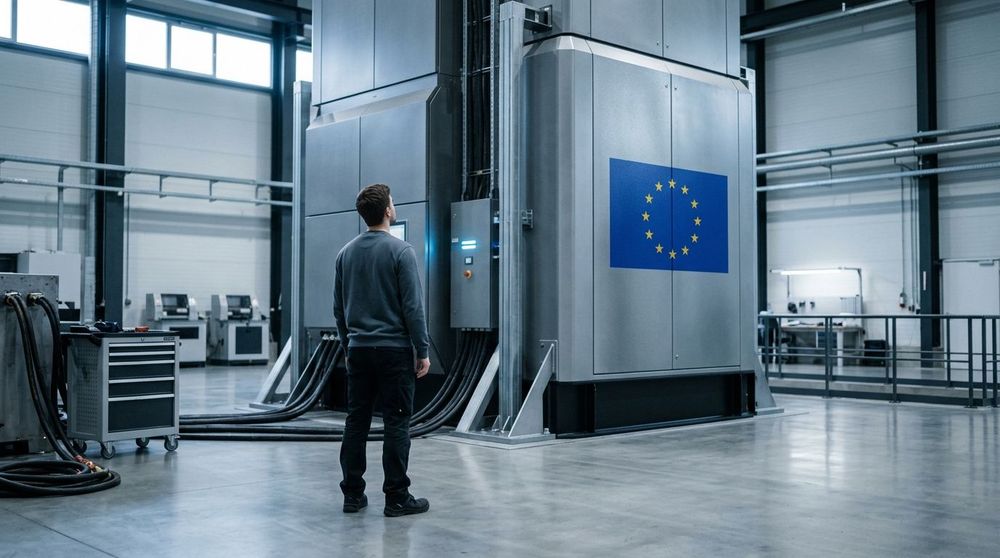
By 2030, Mistral AI plans to secure a massive one gigawatt of power capacity to build an independent European cloud infrastructure. Backed by major global investors and tech partnerships, this ambitious project aims to help European enterprises and governments route their data locally, completely bypassing US-managed cloud systems.
Why is European digital independence such a big deal for AI?
From where I stand, this story is about something much larger than just artificial intelligence. It is about a battle for European digital sovereignty. Historically, European businesses and governments have relied heavily on US-managed cloud giants to run their digital systems. But this setup comes with big risks.
If a foreign government suddenly changes its technology export laws, European companies can find themselves locked out of the vital tools they need to run their daily operations. We saw this happen in the past when Anthropic had to restrict foreign access to its models, leaving European companies temporarily high and dry.
What Mistral is doing to solve this strikes me as a highly strategic move. They are building a physical network of their own servers so local companies do not have to worry about foreign political shifts. For example, they are introducing "Regional Endpoints," which let companies keep their data processing entirely within European borders. They are also selling "European Compute Units"—which is basically like renting dedicated, guaranteed blocks of computer power on multi-year plans to companies like ASML, Capgemini, and CMA CGM. They even created a high-reliability "Priority Tier" with a 99.5% uptime guarantee for a 1.75x price premium, and are opening up their servers to host outside projects, such as Z.ai’s GLM-5.2 model.
They are also successfully getting their foot in the door with governments. I was particularly interested to see their Franco-German coalition with SAP, announced in late 2025, which aims to roll out these safe AI systems across public offices by 2030. Combine that with their "AI for Citizens" program in countries like France, Luxembourg, Singapore, the Netherlands, the UK, and Switzerland, and you can see that public entities are eager for local solutions. To me, deciding to build an independent infrastructure is exactly what Europe needs right now to protect its data.
Can a startup really afford to build its own physical cloud infrastructure?
While the vision of a self-reliant European cloud makes complete strategic sense, the financial reality of it keeps me up at night. Building physical data centers is an incredibly expensive, capital-heavy business. Right now, Mistral runs on less than 200 megawatts of power. Their plan is to reach that 200-megawatt milestone by the end of 2027, and then scale up to a massive 1 gigawatt by 2030. That is a giant leap to make in just three years.
To put this in perspective, they have already raised massive amounts of money from heavyweight backers like Nvidia, Bpifrance, and Lightspeed Venture Partners. The numbers are staggering:
- Sweden Data Centers: A €1.2 billion (about $1.4 billion USD) investment planned for physical infrastructure.
- Paris Data Center: Supported by an $830 million USD loan from banks like HSBC, which funds a local facility holding over 13,000 Nvidia AI chips.
- Financial Position: They are negotiating a massive €20 billion valuation, supported by an estimated annual revenue run rate of over $400 million USD.
This is a massive financial bet. For me, the real question is all about execution: can Mistral actually secure all that electricity, find enough demand to fill those giant data centers, manage these intense costs, and turn this into a profitable, lasting business?
There is also a fascinating contradiction at play. To help pay for this independence, Mistral signed an alliance with Microsoft. Microsoft is co-funding these European data centers, and in exchange, Azure customers get access to Mistral's servers and their Medium 3.5 and OCR 4 models. To me, this dynamic highlights just how hard it is to achieve true independence; even when you are trying to break free from US cloud giants, you still need to partner with them to fund your growth.
Ultimately, I believe Mistral’s strategy is a strong, highly relevant step for Europe. However, the true test will be whether they can successfully transition from being a promising AI model startup into a reliable, world-class infrastructure provider.

Related articles

Scaling African AI Infrastructure through GPU Deployments and Local Compute
Africa is building high-density GPU data centers and sovereign AI infrastructure to close the regional compute gap and power local tech innovation.


Why France’s Move to Build Its Own AI is a Smart Step for Europe
France establishes a fully independent AI system, securing data privacy, leveraging nuclear power, and attracting €109B, ensuring European tech sovereignty.
Scaling L4 Robotaxis: A Technical Breakdown of the NVIDIA DRIVE and Halos Stack
NVIDIA's DRIVE & Halos platforms offer an end-to-end solution for L4 robotaxis, covering in-car compute, safety OS, and cloud AI training.